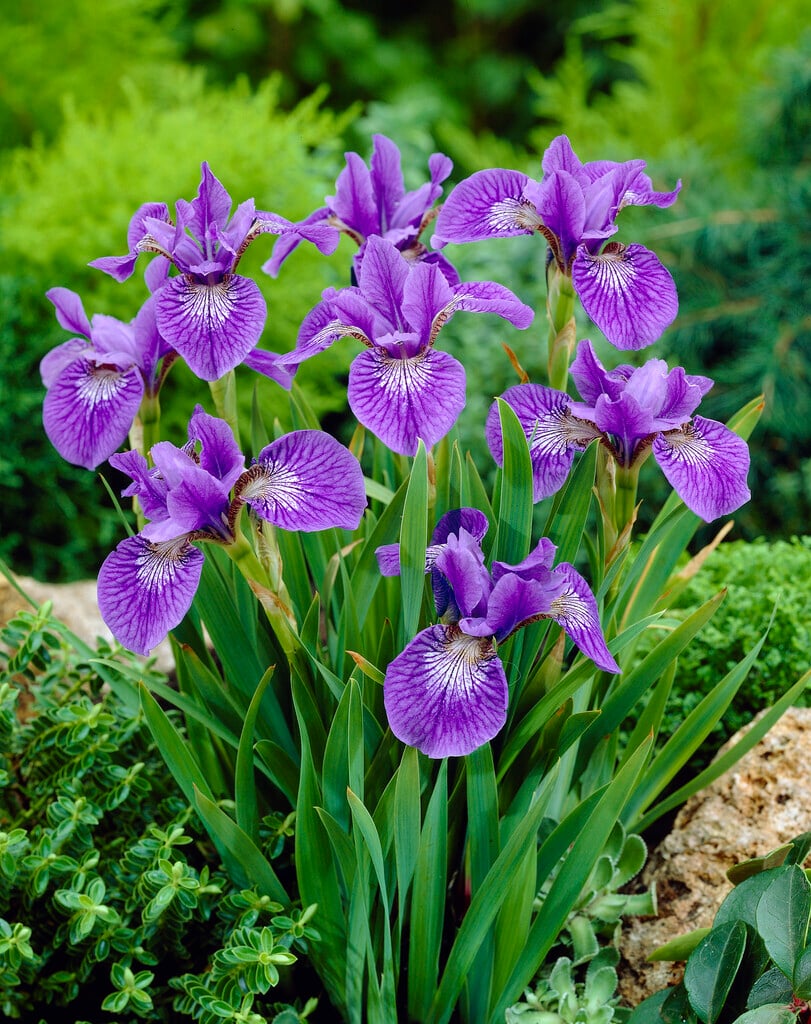
What is the iris sibirica baby sister?
'Baby Sister' features violet blue flowers veined darker on the falls with a white signal on the falls. Plants will reach up to 1.5' tall and 1.25' wide, but as clumps grow larger and denser, the flowering height tends to decrease to around 0.75'. Makes a good parent for short Siberian iris.
When can you separate siberian irises?
COLD CLIMATES: Spring is the best time to plant or divide, with August as second choice. This gives the plant a chance to establish a good root system before winter rolls in. WARM CLIMATES: Avoid the hot weather periods; many prefer the cooler fall period.
What is the best iris sibirica variety?
Iris sibirica 'Butter and Sugar' is a standout among Siberian Irises, showcasing white standards and vibrant yellow falls that bring life to the garden from late spring to early summer. The flower stalks produce numerous delicate blossoms.
Will Siberian iris spread?
Like most bearded iris, Siberian iris grows and spreads from rhizomatous roots that are readily divided to propagate new plants.
SIB (28 chromosome diploid), 6″ (15 cm), Early midseason to midseason bloom. Violet blue (RHS 89D) veined darker on falls, white signal.
‘Baby Sister’ features violet blue flowers veined darker on the falls with a white signal on the falls. Plants will reach up to 1.5′ tall and 1.25′ wide.
Short and vigorous, this short Iris is one of our fastest increasers! Flat petals and standards.